
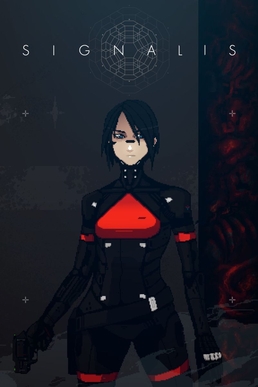
Signalis
Released: Oct. 27th, 2022
Developer: rose-engine
Publisher: Humble Games/Playism
Platforms: Windows, Switch, PS4, Xbox One
Platform Played On: Switch
Minor spoilers within. All images taken from rose-engine’s official press kit
Look, I’m not what you’d call a “survival horror” guy. Sure, Silent Hill 2 is one of my favorite games of all time, and a handful of spooky games sneak their way into my heart here and there, but for the most part the genre is a huge turnoff to me. It could be in part due to how it’s shifted and adapted to appease the “screaming Youtuber”, or the over-reliance on cheap jump scares and gross-out gore (not that I’m against some gross shit). Be that as it may, every once and awhile a horror game finds that right formula of mind-fuckery and genuinely brilliant imagery and design to win me over. And I’m happy to say 2022’s indie darling Signalis accomplished that lofty goal.
It helps it’s just a Silent Hill game. BUT IN SPAAAAAACE. Sorta.
It’s kind of hard to make anything in the survival horror genre and not be influenced by The Big Boys – Resident Evil and Silent Hill – in some way. Together, the two juggernauts not only created the blue print of what a horror game is and should be, but did it so well that the genre has basically been chasing the two franchises ever since. Including everything recent in both respect franchises themselves.
Signalis takes it one step further by stripping out all the modern bells and whistles and dragging the style of game kicking and screaming back to it’s basics. Leaning heavily on a beautifully stylish PS1-era art direction, without looking dated and clunky. While low poly is the big thing now, Signalis does it with style. Instead of just straight copying the clunky sharp edges and blurry textures, it instead goes for something halfway between modern and retro, giving it a unique look that at once feels comfortable and familiar, but also foreign and strange. Which is frankly perfect for a game that’s primary goal is to put you on edge. On occasion, the game would have weird graphical bugs that at first I thought were actual glitches, but over time I recognized were meant to play on that expectation and use it against you. And given it’s attention to environmental details, and an excellent lighting system that plays with your head and amplifies the mood, this could not have been done on a PS1, but it FEELS like it was.
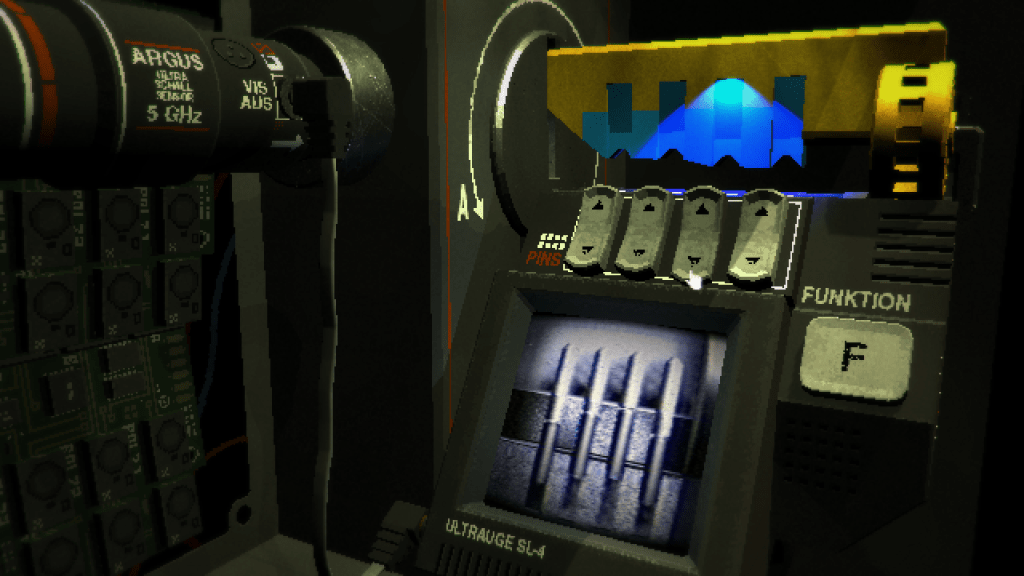
Graphics aside, the game also leans back into the other tried and true trope of horror games: put the funny shaped key in the funny shaped hole design. But, and this may be sacrilege of me to say, I think it does it better than it’s influences ever did. While it can hit that point of annoyance with backtracking across the same rooms for an hour because you got the Eagle Key after you got the Hummingbird Key which each open one room in totally different parts of the map, you generally break up that backtracking with what are some of the most remarkably clever head-scratching puzzles I’ve seen in the genre. There were several times I had to pull out an actual physical notebook (old school gamers know what’s up!) and jot down notes or draw little diagrams to remember things. And while the game does have a clever in-universe photo system unlockable, it’s still not useful for keeping track of passwords and codes you’ll need later on. On multiple occasions, I found myself setting my controller down and just staring at my screen with my hands on my chin in deep contemplation. Never once did the puzzles feel unfair, everything is pretty nicely laid out if you just look around, but some of them do take a little working out to solve. Leaving you feeling a little stumped, but never stuck, and giving you plenty of “A-HA!” moments when everything clicks into place.
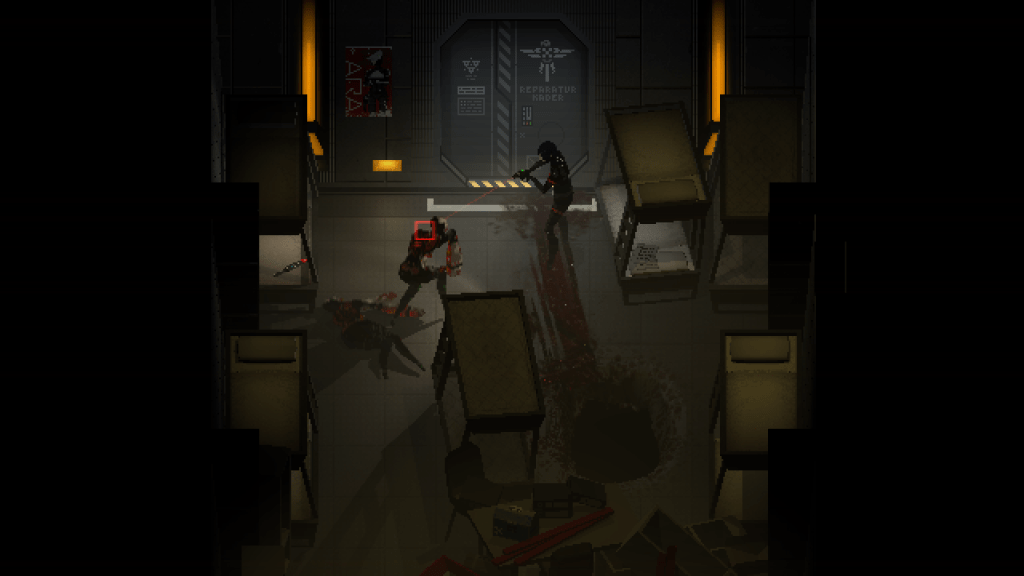
But don’t worry, it also captures the other part of those classics: terrible combat! Ok, maybe that’s being a bit unfair, but the combat is… not the best part of the game to say the least. It’s a fairly basic aim and shoot formula, but without any form of melee combat to fall back on, the game relies too heavily on it’s rather clunky and limited gunplay. Throw in the fact it shackles itself to it’s resource management and inventory space minimalism, and you have a game where you very quickly figure it’s easier to just tank a hit running past an enemy than even bothering to waste a few bullets in frustration trying to kill it. Especially because unless you burn their bodies with flares, they’ll eventually get back up anyway. And as hinted at, the game loves it’s resource management. Bullets and healing items are rarer than they ever felt in even the stingiest of moments in Resident Evil. I was out of ammo multiple times in the game and I didn’t even kill everything. Thankfully, there are very few situations you have to fight. Though the cramped environments mean you absolutely will take hits, sometimes from multiple enemies at a time.
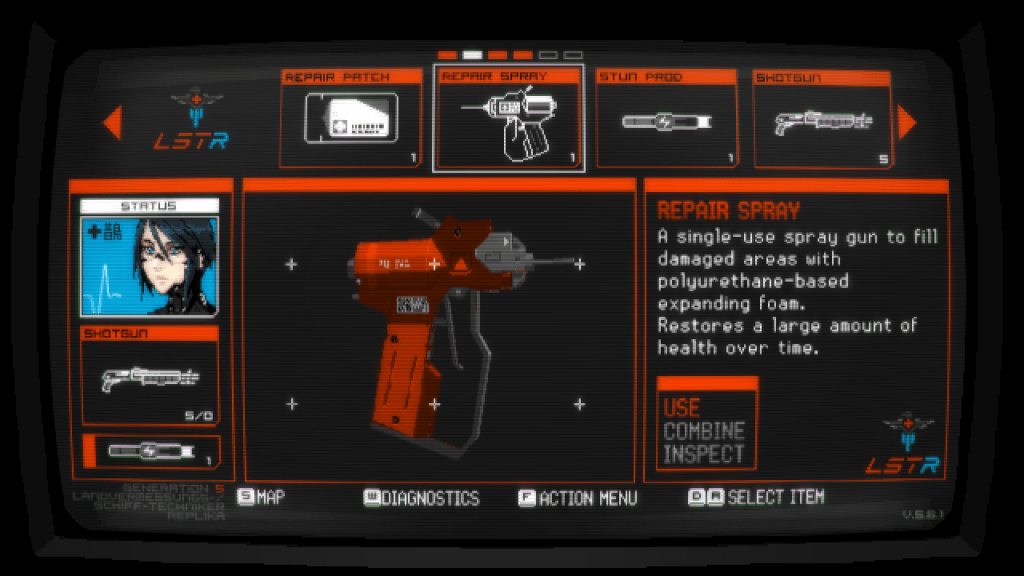
The game has an in-universe explination for it’s inventory limitations. The “Rule Of 6” is explained early on, but doesn’t work in the game’s favor. Holding only six items means having a weapon, ammo, and some form of healing is basically detremental to your survivability. I did early on switch to the “Easy” mode of inventory, which frees up a whole extra two slots, but it felt almost essential to enjoying the game by the end. Not only does the inventory count towards your weapons and healing sprays, but also any key items you pick up. And when doors rely on upwards of 6 items to even open, well, you do the math. Either you return to the door constantly to put one key in every so often, or you make long treks back and forth from storage to grab that one item you ended up needing way on the other side of the map. It’s a little too restrictive to feel like “resource management” and more feels like padding at times. You simply CAN’T carry everything you need with you unless you’re lucky enough to stumble on the right place to use items you’re carrying before you find more trinkets and bobbles to pick up. I know that this is very much a one to one copy of the inventory system from Resident Evil 1, but it was annoying there, and it can be annoying here.
I know what you’re thinking at this point: Bob, this sound’s like a basic cookie cutter survival horror game. And sure, it basically is. But then we get to the thing that generally carries the genre out of mediocrity and into greatness: the story and the scares. And that’s where the game really, truly shines.
As far as genuine horror, I wouldn’t say the game is particularly scary. There aren’t any real jump scares, aside from Silent Hill-looking enemies that like to crawl out of floor tiles sometimes. And most of it’s horror theming comes from some late-game squishy fleshy environments (again, a Silent Hill staple), and some fucked up implications as to what is going on. It’s a typical “virus causes body horror” story at it’s core, but mixed with the Silent Hill style dreamy psychological aspects that will leave you wondering what is real and what isn’t. Very early on, you’re pulled to and fro by multiple perspectives (both figuratively and literally in the first person sections) and what seem at first to be time-jumping point of view changes. This mixed with a good ol’ fashioned case of “unreliable narrator” storytelling means you’re going to be asking the screen “the fuck is even happening right now?” until the very end.
And even after the end.
And even after the second end.
Yeah, that’s the kind of shit we’re talking about here. A fake-out ending halfway through and a seemingly “New Game Plus” but wait, it’s actually the second half of the game. Someone at rose-engine is a fan of Yoko Taro I think. It was a great surprise moment, and really kicked the story into high gear as you began to realize what was going on, but not enough to really have all the answers by the end. If you’re the kind of person that needs a game to spell out it’s story for you by the end, with all it’s twists and mysteries solved, you’re going to not like this game. At all. Because let me tell you, I kept playing this game long after I turned my console off.
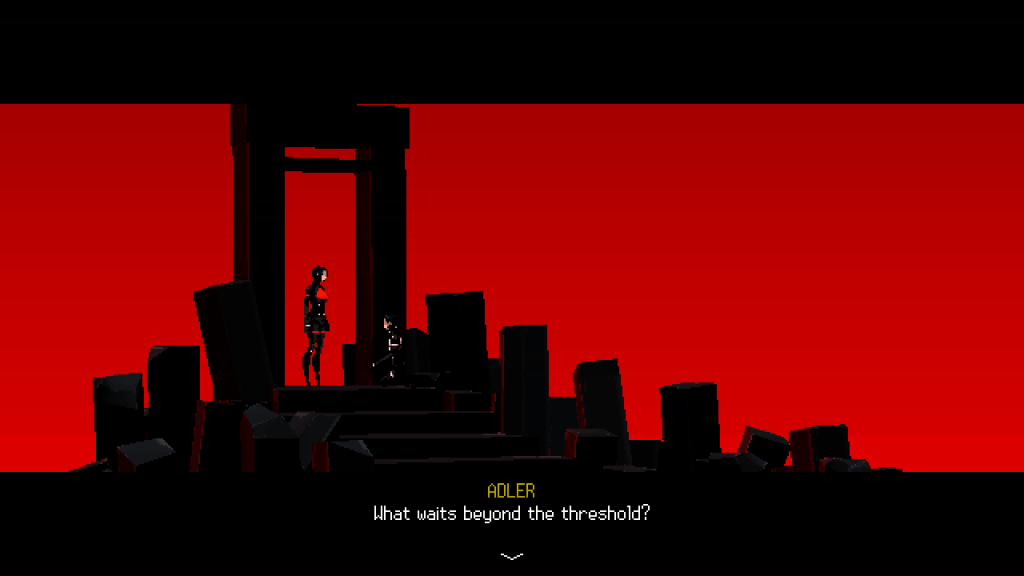
This is a real red-string-on-corkboard game. One that gives fans plenty to pontificate and theorize on. While you can sorta-kinda piece together the main storyline, and it’s a very great one at that, the little details and random-but-is-it-random bits scattered throughout can be put together to form some more detailed backstory. When I say there are multiple-hour story analysis videos on Youtube that I may or may not have needed to fully understand everything, I mean it. Having a couple pages of the wiki up seconds after rolling credits to me is a sign a story was complex and interesting enough to merit being a little muddled and confusing. And as someone that once moderated the Silent Hill forum on an old gaming site, and spent many an hour picking over tiny details with people and figuring them out, the idea that the game is one you have to really study to fully appreciate was definitely a plus in my book.
This is the kind of game that can easily be finished in a single sitting, and offers multiple endings and secret puzzles to unlock for extra playthroughs. But you have to be able to sink down and take the gameplay at it’s worst in order to do so. Picking back through it will probably be great for people that like to find meaning in tons of random imagery and flashes of foreshadowing that you definitely did not understand the first time.
So where do I stand with it? I loved it. A lot. While there were several times I DiCaprio-pointing-at-the-tv meme’d things ripped straight from Silent Hill’s one through four, I never felt it was derivative or tropey. It is it’s own thing, and it’s influences feel honored, not copied. They understood the assignment and nailed it, making it the best Silent Hill game I’ve played since 3. Hell, maybe even better than that one at times. It’s a game I’ll still probably watch video essays on for years to come, making it one of the greats of the genre in my mind. Will it make my Top 100? I don’t know yet. It’s one of those games that may end up pushing it’s way in in the future after I suck up more of it’s hidden details and things I missed. And the fact it may only grow on me after already loving it? That’s a pretty great friggin’ game if you ask me.
 The Mog Pile