
Reviving a classic Nintendo franchise means a couple things tend to happen. The new game is picked apart and scrutinized under a vaseline-smeared microscope of nostalgia for previous games in the franchise, and every tiny reference and returning aspect is brought up in the evergreen debate of “where does this fall in the lore!?”. When a chubby Italian plumber named Mario Mario fights a dinosaur in a castle by popping magic mushrooms and flinging fireballs out of his hands, we absolutely need to know if it takes place before the time when he fought said dinosaur on the moon by transforming into a bird, or perhaps it’s right after he awakens from a dream where he hucks turnips at a toad king and beats up an egg-spitting pink creature that is probably maybe trans?
When you put it that way, it does sound a bit silly…
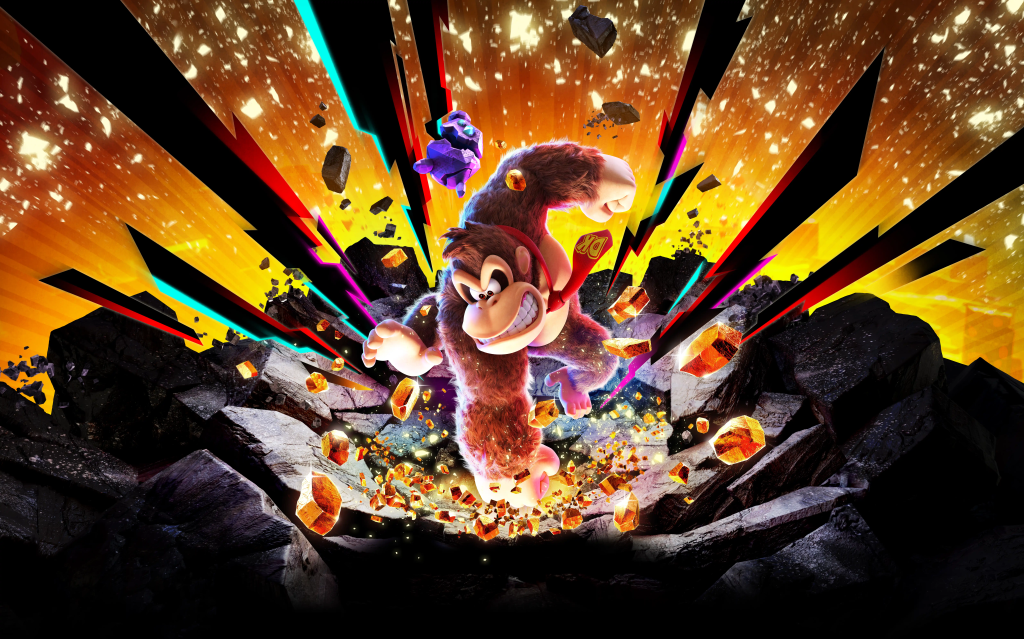
We’re in the thick of this again coming out of the Nintendo Direct about the upcoming Donkey Kong revival, Donkey Kong Bananza. (Which is, for what it’s worth, a fantastic name.) The moment the game was announcd, people began picking apart what it means to see Cranky Kong in the game, where does it fall in the “timeline”. A debate we’ve been watching unfold since Rare brought the series to the Super Nintendo back in the 90s. “Oh, did you know that Cranky Kong in Donkey Kong Country is actually the Donkey Kong from the original Arcade game?!”. Sure, why not. It’s fun to reference with dialogue and wink-nods to us olds that remember back when a game’s story was told with two poorly translated sentences flashed on the attract screen before we jammed quarters in and pressed one of two buttons to make the silly pixel man jump flaming barrels to save the dame.
And just as predictable as the deluge of fan theorizing is, we are hit with the equally predictable wave of “it doesn’t matter, there is no official timeline, it’s not that serious!” posts. These two things go together like peanut butter and jelly, or perhaps peanut butter and banana in this case? And as is the case with any two-sided mud-flinging argument surrounding video games, I find myself somewhere in the middle curious what all the yelling is about.
This is only partially because of seeing a recent Kotaku article circulating on my Bluesky feed by Zack Zwiezen. The title of the article more or less summarizes the entire point: Nintendo doesn’t care about lore, they’re just making silly fun games. I’d be lying if I didn’t say that was a stance I’ve taken in the past, and mostly stand by today. However, something about this take also rubbed me the wrong way when I really thought about it and I had to reach down deep and pull my inner child out of the muck of cynical adulthood to find out why.
In order to figure this out, I’m going to have to take you back about three and a half decades or so, back to when I first started playing video games on the Nintendo Entertainment System in the late 1980s. I had a few games at that time. Super Mario Bros., an all-time favorite Bubble Bobble (which, believe it or not, has it’s own decades-long lore debate…), and of course, the classic Legend of Zelda. And that latter game is where I’d like to take this discussion.
Throughout my formative years, I swung swords at a pig man and saved a princess. Through A Link To the Past, to Ocarina of Time. And never once did my mushy child brain ever go “is this BEFORE or after the last game?!”. Because when you’re in the thick of it, it really doesn’t matter. You just want to collect the heart pieces, grab your hookshot, and hide behind the couch when a Redead starts suckling on Link’s skull and traumatizes you for years to come. It wasn’t until I became “Online TM” that I began to see people discussing The Zelda Timeline!
This was an idea I was very quick to dismiss, scoffing at the idea that somehow 10 games of the same character fighting the same mobs and doing essentially the same quest in different graphical styles with very minimal actual story or lore would take place in some grand plotted out history of a universe that one Japanese game developer conjured up long ago and has dedicated his life to seeing come to fruition. Sure, there are tiny connections, but those always felt more like easter eggs to fill you with those warm-fuzzies that only remember things from back before you paid taxes or had to worry about your prostate can do.
That was, of course, until Nintendo did the unthinkable: They fucking wrote a book about it.
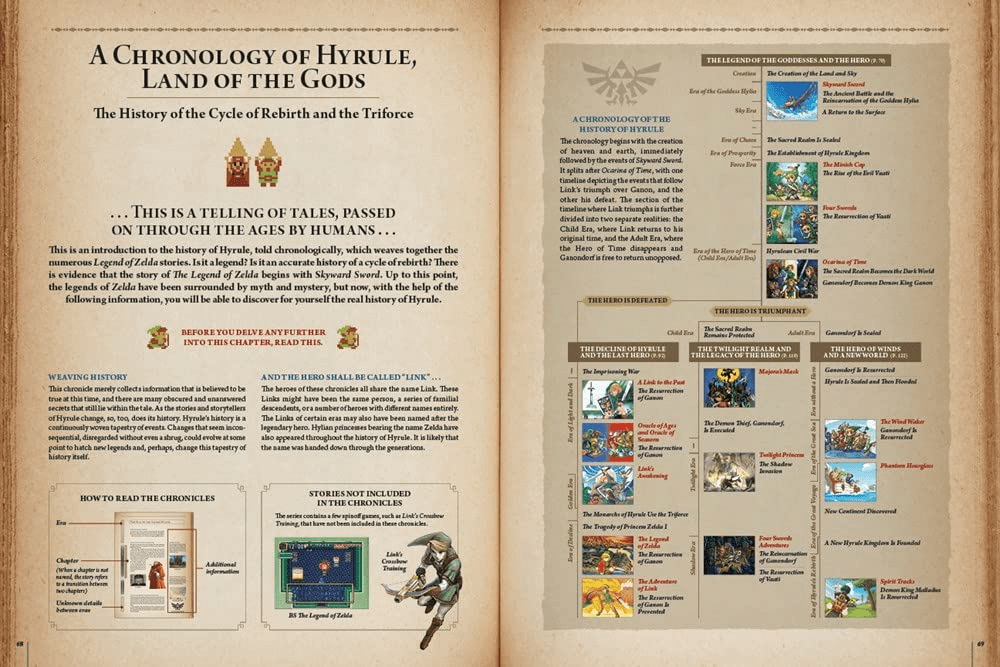
The Hyrule Historia ruined video games for me.
Okay, so I’m being hyperbolic here, but damn if it wasn’t an insufferable time to like Nintendo games. There was now an “official” timeline for every single one of Link’s adventures, tying them all together in some flimsy package that you can immediately tell was never planned out in advance or thought about until some exec at Nintendo realized there was cash to be drained from the fanbase there. At no time did this enhance my gaming experience with the franchise, nor did it answer questions that needed answering. It was there to continue the profitable online debates that keep the name “Legend of Zelda” fresh in the gaming zeitgeist.
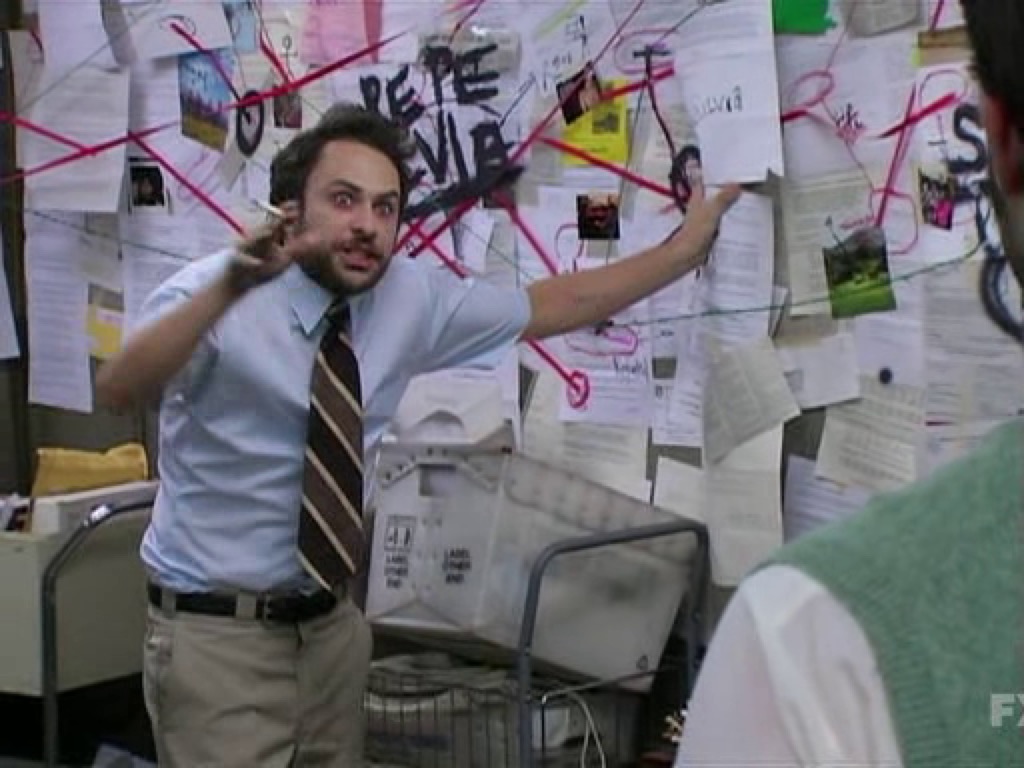
I feel like this moment in time was a flood-gate opening of sorts. Suddenly, every video game series was open to the feverish online red-stringing even when the games themselves hardly merited it. After years of wading through the stagnant waters of these forum threads and blog posts, it’s easy to see why one might become a bit jaded and bitter about the whole idea. Video games aren’t meant to require a several-hour college level course in history to enjoy, after all. This shit’s getting tired and so am I.
But where does that leave me now?
Here I am doing the thing I said I was burned out on years ago, writing a blog post about video game chronology lore. Does that make me a hypocrite? Maybe. But over time I’ve softened my views on this topic and come to a different kind of understanding with people’s need to Charlie Day-meme their favorite franchises.
In order to make it all make sense, I have to do the one thing that triggers everyone that takes video games seriously in any capacity. I have to say THE THING: Video games are meant to be fun.
I know, I know, controversial hot take here. While I’m always one to talk about how video games can be more than just a toy to play with, all of that lends itself to the general idea that video games are meant to be fun. And you know what? That includes pontificating about stupid timelines and lore connections of polygonal monkeys and what time in his life his bananas were stolen by the pirate crocodile or who Dixie Kong’s biological grandfather is or whatever the fuck. At the end of the day, it doesn’t really harm your enjoyment of a video game if someone else wants to write a thesis about it. When Donkey Kong Bananza comes out, you can pick it up and play it and enjoy it and move on all the same. If Shigeru Miyamoto didn’t care at all about the future of Donkey Kong Jr., why do you care if someone else does? I say let the fanatics have their fun, it’s not hurting anyone.
This all falls into the idea that a fandom can keep something alive outside of the works themselves. Be it through fan fiction or shipping or timelines, etc. It really only becomes a problem if people get mad at developers for doing something different. If a creator comes forward and does or says something that completely disregards your headcanon, you need to be able to accept it. And if it doesn’t make any logical sense or retcons something you thought was important, you have to be able to let go and move past it. If it really upsets you, go make a two hour long Youtube video about plotholes and inconsistencies if you really want to. But remember the bulk majority of players really aren’t going to care, they just want to press buttons and make the funny gorilla pound the ground.
I’m not even really sure what the point of writing this all down is, aside from fence-sitting between two ideals and presenting an alternative take on something I’ve spent many years reflecting on. I completely understand the point that some games don’t need intricate lore and it’s likely the developers couldn’t care less about timelines and family trees of fictional characters. But I’m also of the mind that it’s perfectly ok to have fun theorizing and adding your own connective threads when you pick up on a reference in your favorite works. As with any aspect of fandom, it’s all in how serious you take it, and how willing you are to let things go when they aren’t up to your standards.
By the way, Pauline is actually Rosalina’s great great great grandmother, in my next post I’ll discuss how back in 1986 Miyamoto said in an interview that Wrecking Crew took place in an alternate universe and…
 The Mog Pile