
Let me paint a picture for you:
A cock-sure thief and a beautiful young gypsy woman sit down at a fireplace in a twisted mansion. After surviving horrors unimaginable, they decide to drink away the evening and pontificate on their lives. In a drunken stupor, our brash thieving companion begins to talk about how he is jealous of our protagonist for having amazing magical abilities. What follows is a heart-wrenching scene where she berates him for daring to speak of envy for her, given the pain and misery her life has been because of her powers. A drunken tirade about wanting to feel meaningful and wanted, for dealing with the unfathomable pressures of psychic foresight ostracizing her from her family and home. A heavy weight blanketing the entire scene as two mostly-strangers come to understand each other on a level that only the removed filters of a heart addled by drink can offer.
And all of this emotional heavy-lifting is done through 32-bit polygonal characters and early-era voice acting in a horror-role playing game on Playstation 1. Probably wouldn’t have guessed that.
Before I get to the reason from bringing up this scene, I would recommend taking the time to watch it in it’s entirety. It’s a genuinely beautiful sequence that most gamers have likely never witnessed.
So, why dig up a random cutscene from an obscure game very few people have played? Unfortunately, it’s in response to an article written in bad faith about a recently successful turn-based RPG called Clair Obscur: Expedition 33. While the game appears to be, by all accounts, fantastic, it is breaking into the main stream in ways that the genre rarely does outside of successful franchises. And, as is always the case when something relatively niche breaks containment, the hot takes are not far behind.
The article, titled (and I cringe to even WRITE this in my own work) “After years of despising JRPGs, Clair Obscur has finally brought me around by ditching the standard cast of tedious teenagers“ was written by Joel Franey for GamesRadar. And while there are parts of it that are somewhat understandable, it does bring back some bad memories for me, and many other long-time genre fans, personally.
I grew up with video games, and my favorite genre for the last few decades has been the JRPG. I’ve probably broken triple-digits on the number of them I’ve at least played, if not beaten in their entirety. You can see plenty of them in my Top 100 list, many towards the top. So why would I feel the need to take issue with some random person, who is clearly not particularly well-versed in the genre, and their opinion on JRPGs as a whole?
Well, because I’ve done this before. Every so often, JRPGs join anime in the constant battle against dismissal by western critics. At it’s root, this is a thinly veiled racist view towards Japanese writing and creative sensibilities. You see it in the constant stereotype that Japanese media is “weird” and “immature” and made mostly for children. Something that any well-adjusted person would likely see as a broad-stroke generalization and immediately disregard.
While at it’s base, it’s easy to understand where this stereotype comes from. There certainly is plenty of Japanese media starring plucky teenage protagonists doing silly things and going on light-hearted romps to kill God. And the JRPG genre is certainly rife with tropes, same as any genre is. But to blatantly disregard mold-breakers within this subset of games speaks of an ignorance that any fan of something would feel obligated to at least present opposing case points towards.
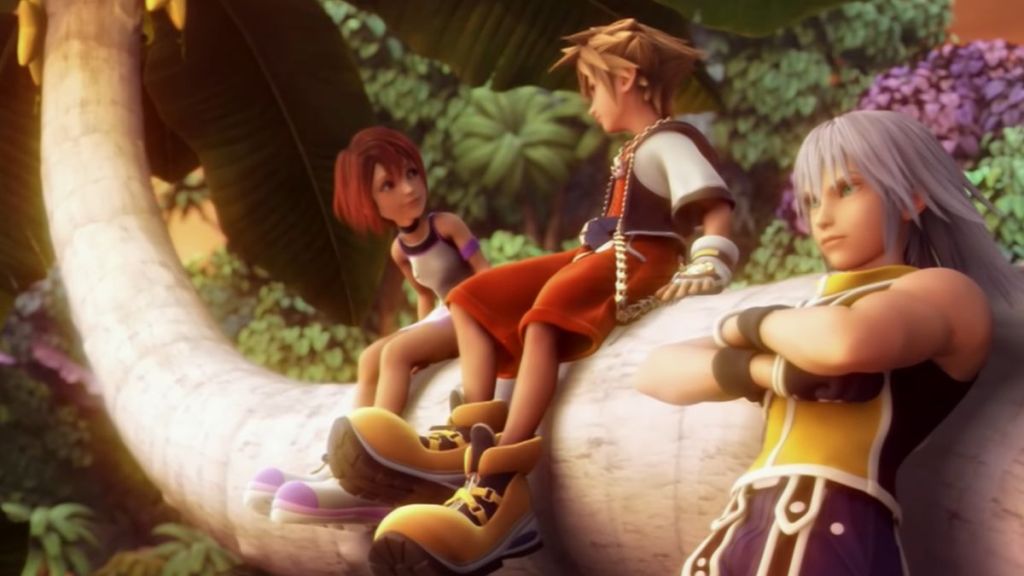
And that’s exactly what I intend on doing.
My intention isn’t to convince someone to just drop their bias towards something they clearly have no interest in learning more about. But if you’re taking the time to read this you are either going to already agree with me, or you’re at least interested in the deeper cuts that you may have missed out on by not being as involved as those of us that bury ourselves in these games are.
The finer points of the article dig at the idea that there aren’t JRPGs with “adult” characters presenting meaningful, realistic relationships or acting with matured behaviors. Setting aside the fact that at the end of the day, the age of a fictional character is mostly a moot point given how some kids act like grown adults in media and some wised old adults are actually in their 20s, we have to take a look at video games that do present older characters with adult problems and behavioral patterns.
So, let me list off a few examples of JRPGs that I think circumvent some of the expected cartoony aspects this writer seems to think the genre never escapes.
One of my favorite games to point at when it comes to mature storytelling with older characters, is Lost Odyssey by Final Fantasy creator Hironobu Sakaguchi. A game about several immortals dealing with the pressures of eternal life, watching as people they love grow old and die. Living whole lifetimes knowing everything they know and understand will eventually be lost to time while they have to continue on with the pain. And while it isn’t one to necessarily present itself without some silliness, it shows that a game can put forth complex stories of sorrow, remorse, loss, and sadness while also providing moments of levity to make sure that we’re not just being bogged down in misery the entire playthrough.
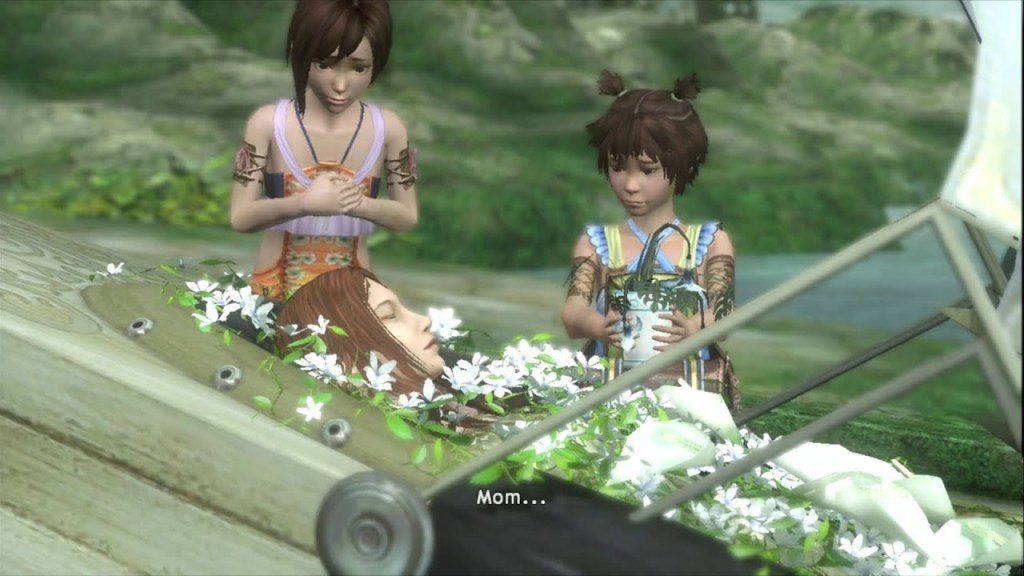
They even managed to get well-renowed best selling Japanese author Kiyoshi Shigematsu to write short stories within the game that tell various events in the life of the immortal protagonist Kaim. These alone are stellar examples of writing within a fantasy setting with the intent of capturing mature, adult situations and the emotional impact they can bring with them.
Another game that often comes to mind for me is the recently remastered Suikoden 2. A story that mostly focuses on the impact war has on the citizenship of nations and how the foundational changes that come from it can drastically alter the individual’s path in life. And while it has plenty of colorful characters, it’s primary protagonists are three friends who find themselves torn apart by their involvement in a resistence movement against a tyranical war-mongering empire, and the divergent viewpoints of the world lead to them coming to blows against one another.
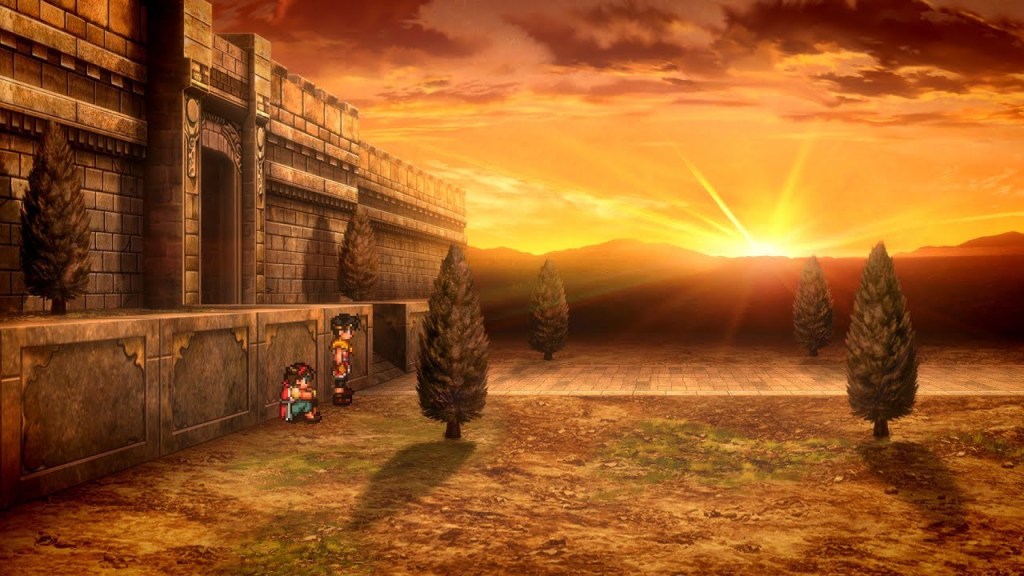
This deeply personal story is wrapped in a gutwrenching war story showing truly horrific events commited by vile people that very much reflects real-life war crimes and invasions. And it does this all while still having a very cartoony and exaggerated presentation. Even if the characters are “teenagers” and don’t always act with a level of relatable maturity.
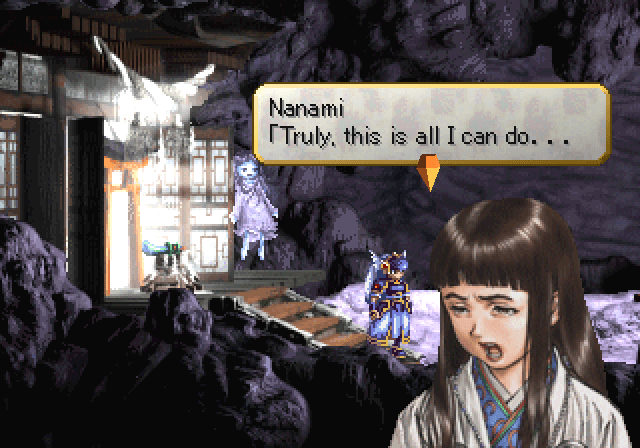
Or perhaps a game wrapped loosely in Norse mythology that is entirely focused on tragedy as a main driving point of it’s story is more your style? Valkyrie Profile is one of the most poetically written video games I’ve ever played. As a Valkyrie, you collect the souls of those lost and usher them to Valhalla. While the core gameplay is about strenthening yourself and preparing for a war between Gods, the hourly gameplay loop is full of compact stories about the characters you recruit. Each going through their own story arc, most of which are genuinely heartwrenching and carry emotional weight.
Take, for example, the story of Nanami, an orphaned child adopted by someone who lost their own child as a stillborn, who finds herself haunted by the soul of the deceased child and comes to realize she will never be accepted as the real child of her parents. She willingly gives up her life so that the soul of the child can take her body, a sacrifice that is genuinely upsetting to think about.
I could certainly continue with more examples of games that buck the alleged trend of Japanese role playing storytelling. Perhaps by mentioning the works of Yasumi Matsuno, such as Vagrant Story or Final Fantasy Tactics with their deeply complex stories of political intrigue. Or the setting-hoping narrative woven between several characters in Live A Live that blends several different genres all into one cohesive whole. Dare I even START with Xenogears… There are countless examples of what JRPGs can bring to the table outside the stereotypical and tropey.
But we have to set that aside to address a different take on this whole situation: why should it matter if there ARE teenage characters and ridiculous situations? While my examples here so far have shown JRPGs that are more in line with Expedition 33 insofar as they tell more “mature” stories with adult characters, there are still plenty of examples of exceptional storytelling in games that fall directly into frames that Mr. Franey seems to hold disdain for.
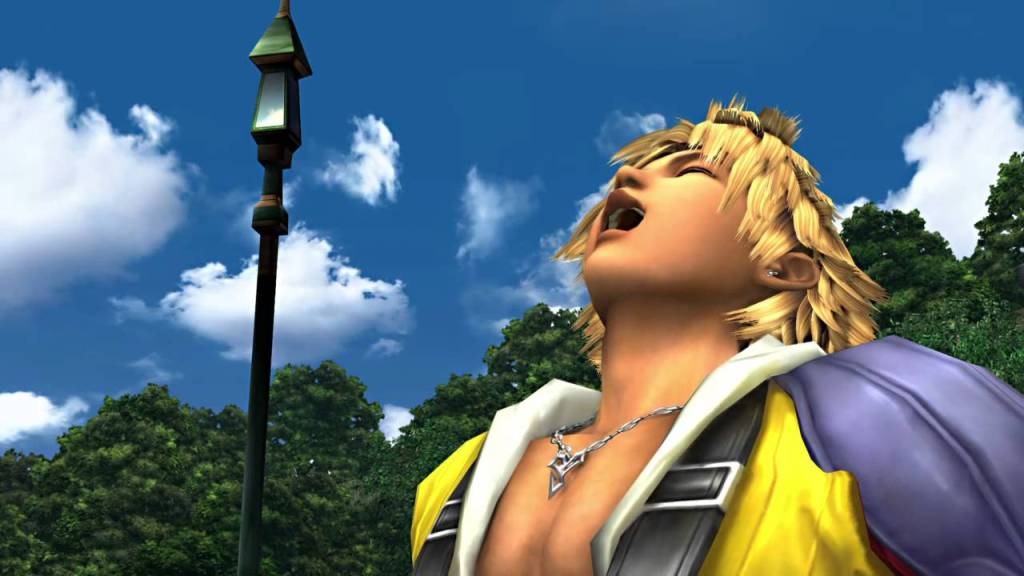
If someone can look at Final Fantasy X, a game starring a purposefully childish and abrasive teenage lead, and tell me it is without merit or proper execution, I’d be genuinely surprised. In fact, I think the laughing scene that launched a million memes in and of itself is a perfect example of not seeing the point in comical or weird sequences in a mature storytelling structure, and missing how very much they reflect realistic human relationships.
One of the best things about works of fiction are that they can push you beyond your scope of understanding. They can put you in the shoes of people unlike yourself. In worlds with rules that do not mirror your own. Situations that you’d never find yourself in. And that doesn’t always have to be grounded or realistic. It doesn’t have to always carry heavy weight at all times. It doesn’t have to take itself too damn seriously.
At the end of the day, you can’t convince someone to like what they’re not gonna like. But I also don’t see purpose in ignorantly overlooking an entire genre of work out of some preconcieved notion that it’s one thing and one thing only. And to use that mindset to prop up another game that simply should be allowed to be great off it’s own merits and it’s own merits alone.
Genre is a tool at best, something to be used in whatever way we see fit. The “J”RPG is no different: Be it silly childlike wonder twisted in Mother 3, the bloody and violent horror of Parasite Eve, the epic religious and philosophical space opera with giant mechs of Xenosaga, or just a coming of age story about a kid and Donald fucking Duck, there is so much more that can easily be overlooked when you hand-wave and disregard without putting in the work.
Also, imagine hating a genre that gave us Chrono Trigger…

